
.svg)


MRI Segmentation Platform
AI-Powered Neurology Diagnostic Assistant

Confidential Medical Company
About The Project
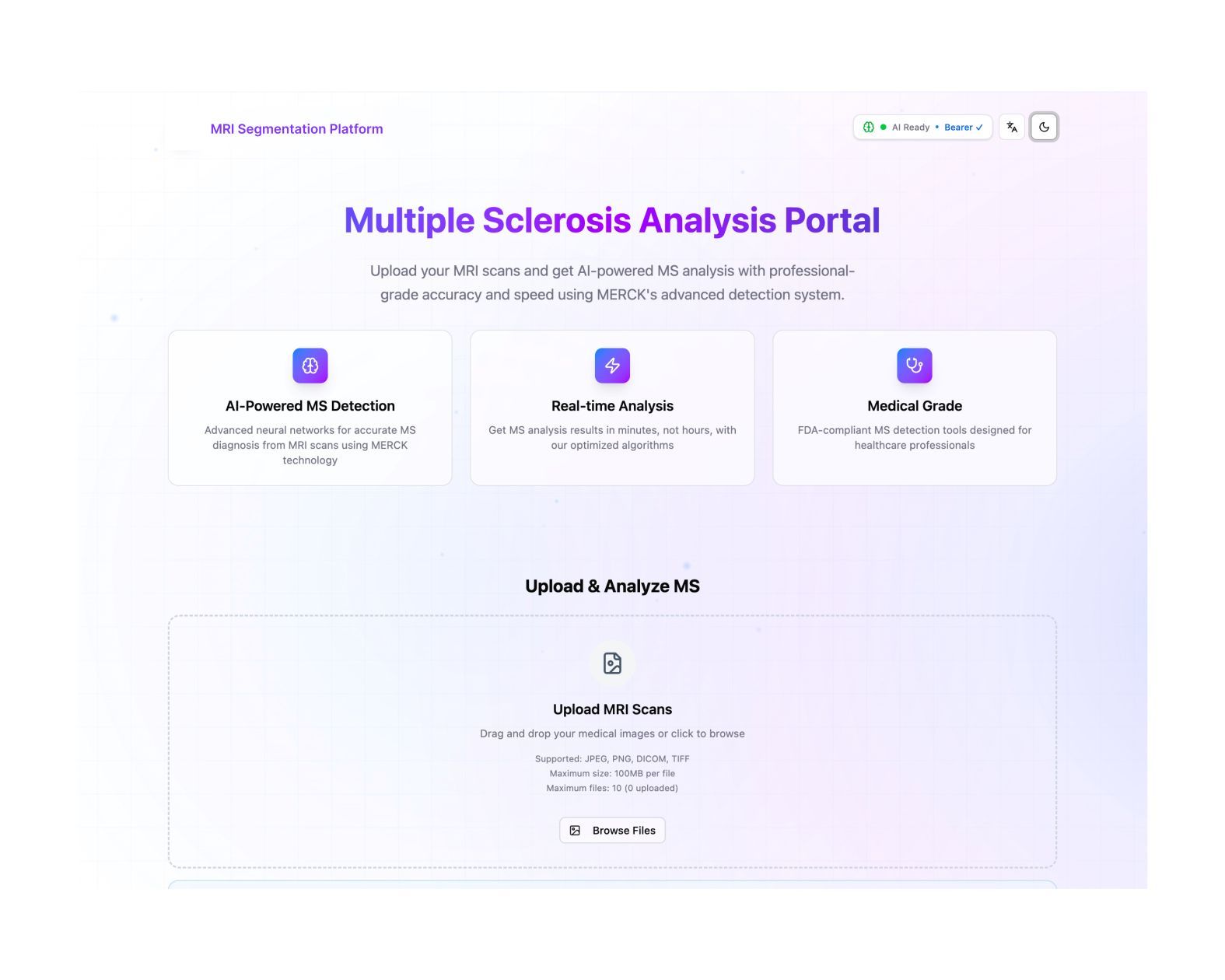
Areeb Innovative Technologies, in collaboration with a leading international medical company (confidential), has developed and delivered a state-of-the-art AI solution that is redefining how neurologists assess and diagnose Multiple Sclerosis (MS). This platform gives doctors a smarter, faster, and more confident way to evaluate brain MRI scans, helping them deliver accurate decisions when it matters most.
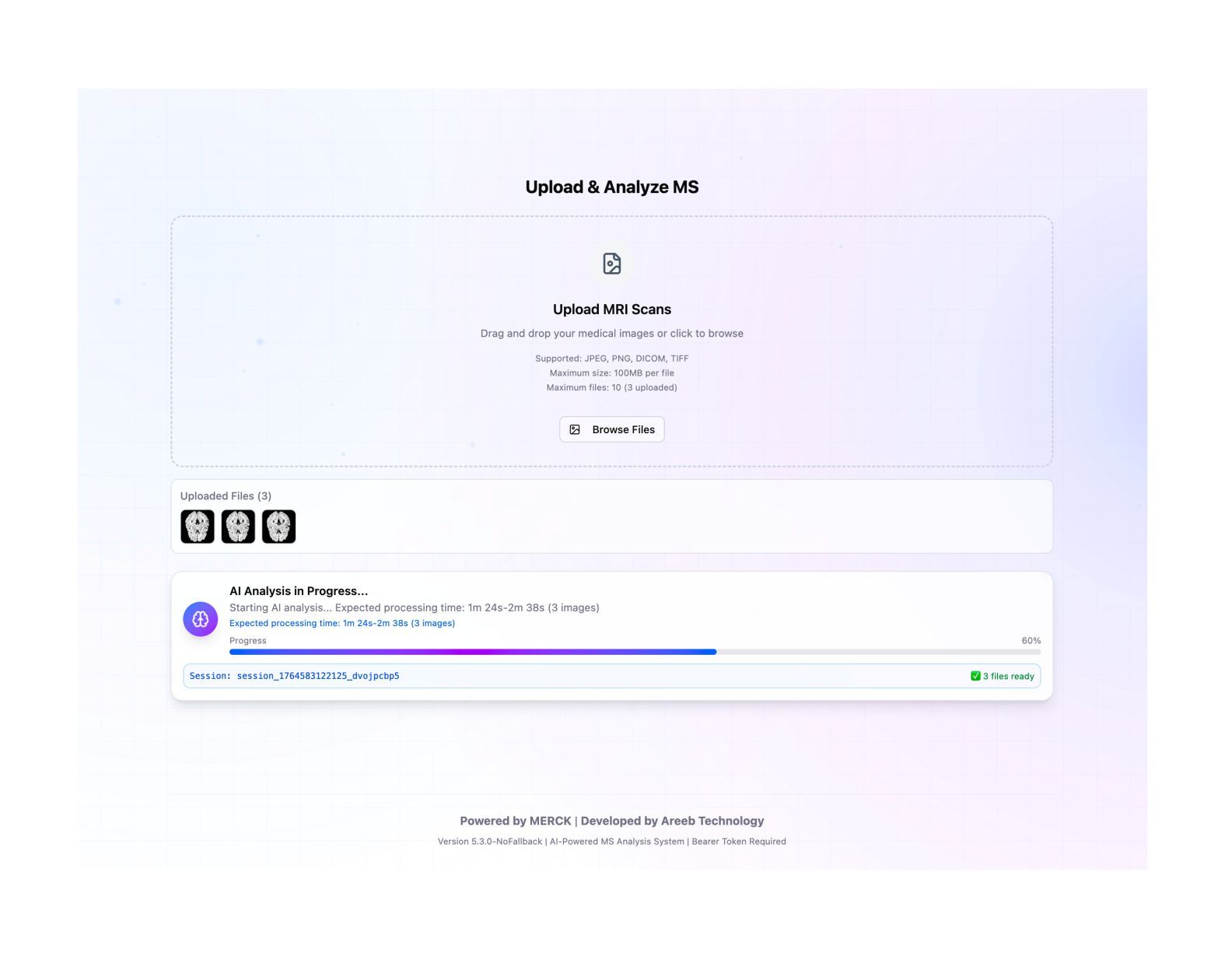
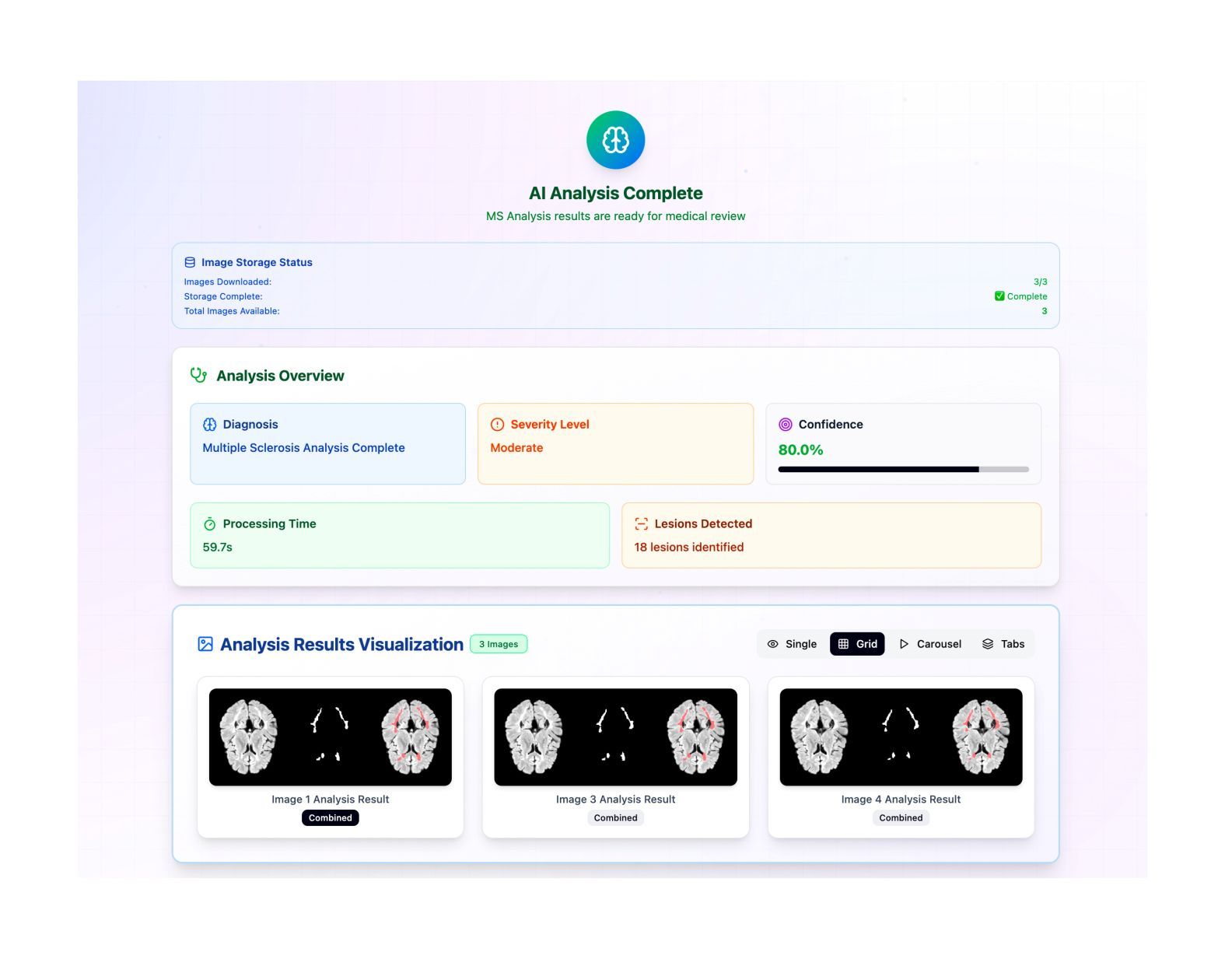
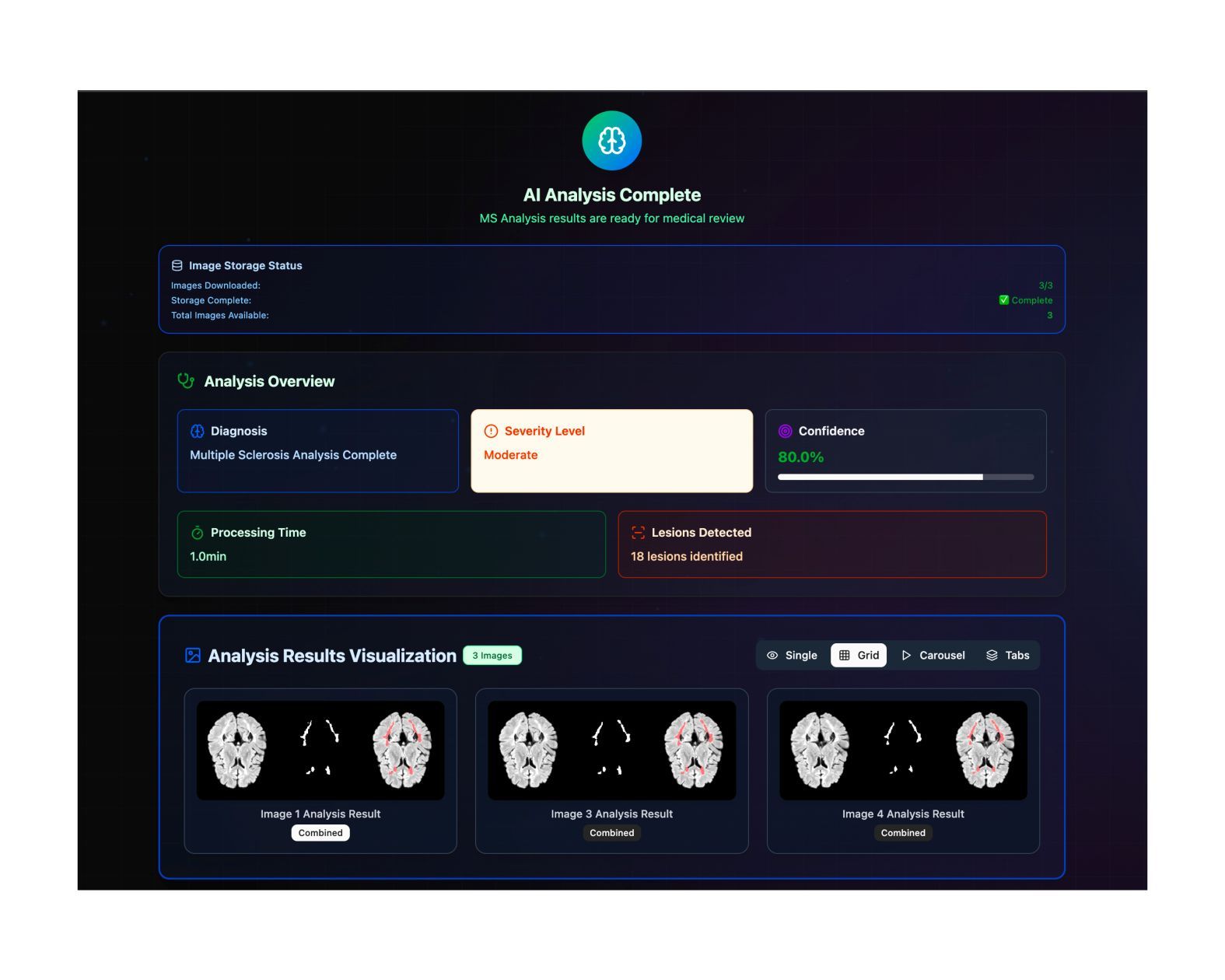
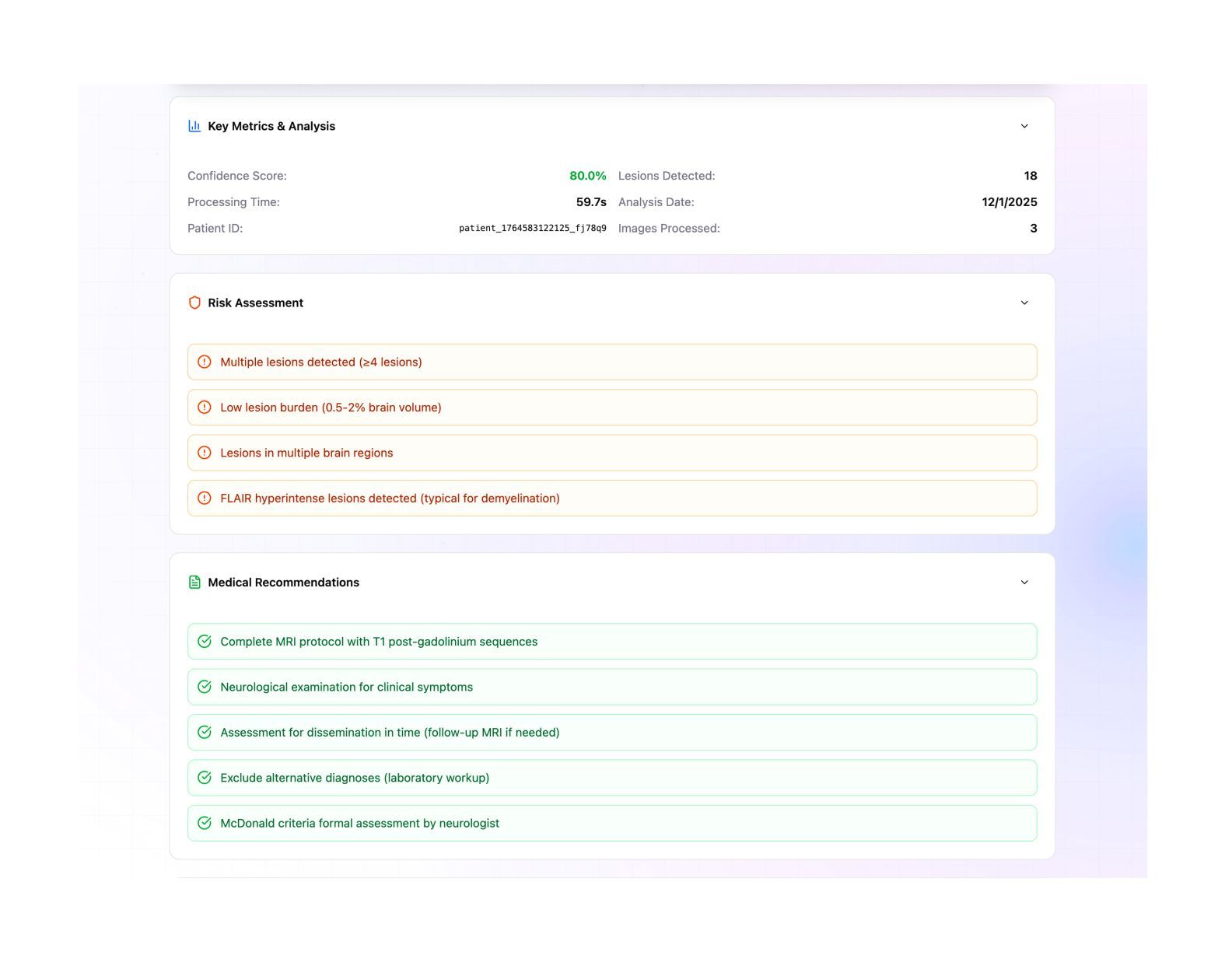
With a secure upload, the platform automatically analyzes MRI images using advanced machine learning techniques and instantly highlights potential MS lesions with exceptional clarity. The system separates MS from non-MS cases, marks suspicious areas directly on the scans, and generates a clean, structured medical report complete with confidence scores and risk indicators. Neurologists get a clear visual story backed by real data, making every diagnosis more conclusive.
Powered by advanced AI and machine learning techniques inspired by leading scientific research, the platform understands MRI scans the way specialists do, across multiple slices, in context, and with a clear view of the brain. This multi-slice intelligence helps the system detect subtle patterns that may be missed by traditional tools.
Fast processing. Smart recommendations. Professional, exportable reports. Using modern machine learning pipelines, the platform fits seamlessly into clinical workflows, enhancing accuracy, reducing workload, and empowering doctors with modern diagnostic support.
The platform supports Arabic and English interfaces, along with light and dark modes to ensure a comfortable and accessible user experience for all clinicians.
AI-driven clarity for confident MS diagnosis.
key challenges
Complex MRI Variability Across Devices & Centers: Brain MRI scans differ widely in contrast, resolution, orientation, and noise levels depending on the scanner and protocol. Building a model that generalizes across all these variations required extensive preprocessing pipelines, normalization techniques, and careful dataset curation.
Lesion Detection in Highly Subtle and Ambiguous Regions: MS lesions can be small, faint, and easily confused with normal anatomical structures. Training the model to reliably detect these subtle patterns required advanced multi-slice machine learning, careful annotation, and multiple iterations of refinement.
Limited Annotated MS Datasets: High-quality, pixel-level MRI annotations are scarce. The team designed novel strategies for data augmentation, semi-supervised learning, and cross-dataset validation to achieve strong performance despite limited labeled data.
Multi-Slice Spatial Reasoning: Unlike standard 2D models, MS diagnosis depends on understanding relationships across many consecutive slices. Implementing multi-slice machine learning architecture, inspired by cutting-edge research, required substantial optimization and model engineering.
Balancing Sensitivity & Specificity: Over-detection leads to false alarms; under-detection risks missing true lesions. Achieving the right balance demanded careful tuning, custom loss functions, and rigorous evaluation with neurologists.
Generating Clinically Meaningful Reports: Transforming raw model outputs into structured, readable medical reports was a major challenge. The system had to be trusted by neurologists, which meant ensuring clarity, consistency, and explainability in lesion overlays and confidence scoring.
Ensuring Deployment-Grade Speed & Security: Delivering fast inference times without sacrificing accuracy required GPU optimization and streamlined preprocessing. At the same time, strict data protection and encryption had to be embedded throughout the platform.
Key Highlights
-
AI-Powered MS Detection: Automatically analyzes MRI scans and flags potential MS lesions with high clarity and precision.
-
Visual + Data-Backed Diagnosis: Integrated lesion maps, confidence scores, and structured reports support neurologists with actionable insights.
-
Multi-Slice Intelligence: Advanced machine learning models interpret multiple MRI slices collectively, mimicking the way specialists form a complete diagnostic picture.
-
Fast & Secure Workflow: Doctors simply upload scans to a private, encrypted platform; the platform handles the rest in minutes.
-
Clinically Aligned Reports: Professional summaries designed to fit into real clinical workflows and support decision-making.
-
Seamless Integration: Exportable results and a smooth UX allow the platform to fit naturally into existing medical processes.
-
Multilingual & Accessible: Full Arabic and English support, plus light and dark UI modes for enhanced usability.
Outcome & Impact
-
Faster Assessments, Higher Confidence: Neurologists can evaluate MS cases more efficiently and with stronger evidence-backed clarity.
-
Earlier and More Accurate Diagnoses: Enhanced lesion visibility and AI-driven indicators support timely intervention and better patient outcomes.
-
Reliable, Consistent Workflows: The platform brings standardization to MS evaluation, reducing error rates and variability.
-
Improved Patient Engagement: Clear visuals and structured summaries help doctors communicate findings more effectively with patients.
-
Future-Ready Clinical Practice: The platform introduces modern AI and machine learning capabilities that scale with hospital needs and unlock continuous workflow improvements.